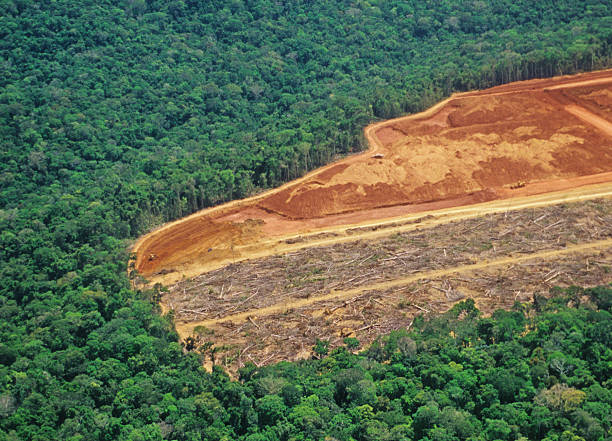
Deforestation harms the planet and humans in many ways. Trees play a major role in the global effort to slow the pace of climate change, preserve wildlife, and support more than eight billion people. Yet deforestation continues, threatening these goals and reducing biodiversity.
What is deforestation, and where does it occur?
Deforestation is the purposeful clearing of forested land, leading to permanent land-use change. Most deforestation—permanent forest loss—is driven by farming, grazing of livestock, mining, drilling, and settlements, according to research from the World Resources Institute (WRI).
Deforestation occurs all over the world, with Latin America, Southeast Asia, and Africa showing the largest amounts of permanent forest loss through agriculture. Between 2015 and 2020, the regions that had the highest annual deforestation rates were Africa (primarily Eastern and Southern Africa), South America, and Asia (primarily South and Southeast Asia), according to the Food and Agriculture Organization of the United Nations (FAO).