While Squid Game, Parasite and BTS have dominated Korea’s pop culture revolution, books and stories are now having their own moment, writes James Balmont.
This year, as Netflix pledged a $2.5bn investment in Korean visual media in the same month that Blackpink’s headline performance at Coachella marked a milestone in the festival’s representation of Asian music, it would appear that South Korea’s pop culture revolution is in full force. But just as the V&A’s Hallyu! The Korean Wave exhibition – which has dazzled UK visitors with ephemera from Parasite and Squid Game and rooms blasting BTS since September 2022 – comes to a close, another branch of K-culture, less concerned with audio-visual spectacle, is bringing the country’s fascinating history into greater focus.
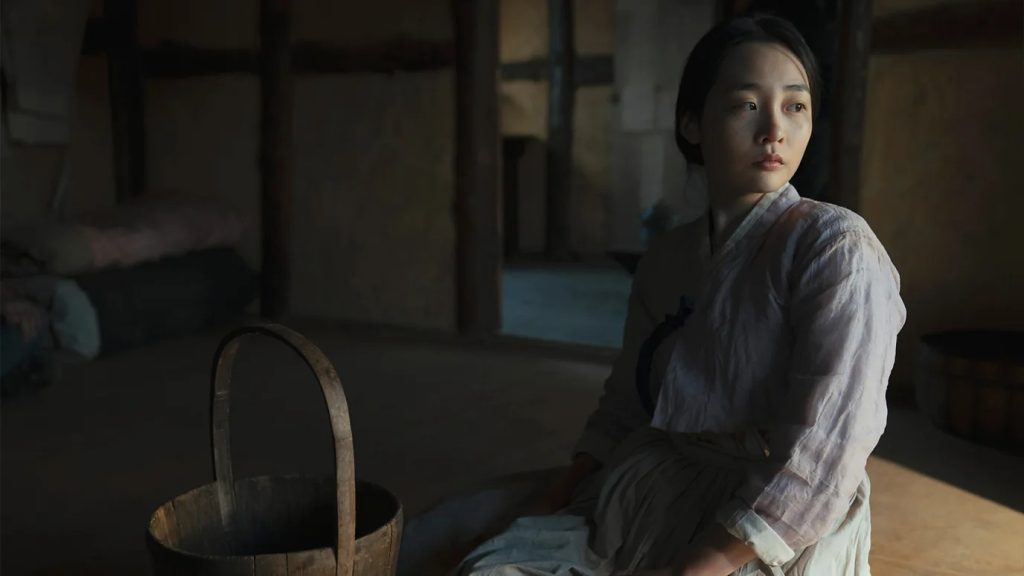
This spring, Penguin Classics published their first collection of modern Korean literature in the UK – a short story anthology that brings the country’s dramatic 20th Century to life. The history witnessed via The Penguin Book of Korean Short Stories, edited and curated by Bruce Fulton, parallels that observed in one of the great works of contemporary Korean long-form fiction: Min Jin Lee’s Pachinko (season two of Apple TV+’s acclaimed adaptation wraps filming this month). With the Booker International Prize continuing to spotlight Korean storytelling in 2023, an exciting new chapter of the K-culture revolution is unfolding. And as Fulton and Lee tell BBC Culture, it’s one that fosters a greater understanding of the country’s development over the past century.
All literature published in Korean during the colonial period is grounds for optimism. It’s a reflection of the belief of many writers that someday their writing would endure, even though the future was uncertain – Bruce Fulton
One need only to skim the two-page historical chronology that opens the Penguin volume to get an understanding of the extensive disruption the country has endured in the 20th Century. Across 25 short stories and 80 years of writing, the book spans the country’s devastating colonisation by Japan in 1910; the bifurcation of the country into North and South ahead of the Korean War in 1950; the coup d’état of 1961 that prefaced decades of military dictatorships in the South; and the rapid and painful modernisation process that led to the beginning of democratisation in 1987. Today, South Korea is the 10th largest economy in the world – a metamorphosis few countries can claim to have replicated during the same period.
‘Hope and humour’
Given the context, it should be no surprise that, in the words of professor of Korean literature Kwon Youngmin in the book’s introduction, “Korean fiction has earned a reputation, to an extent deserved, of being gloomy and depressing”. But what the collection does so well – via diverse tales of peddlers and sex workers, battlefield casualties and lonely wanderers searching for connection – is to dismantle this limited perspective with tales of hope, humour and perseverance, illustrating a profound depth to the story of Korea’s transformation.